From Teaching Women’s Rights to Protecting the Powerful: The Epstein Scandal Explained
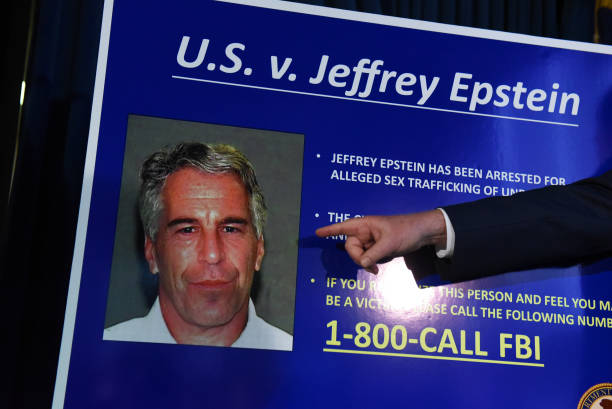

For decades, Western nations have portrayed themselves as champions of women’s rights, child protection, and human dignity. Through international institutions, political pressure, and cultural influence, they have promoted standards of equality and justice around the world. Yet one of the most disturbing criminal scandals of the modern era unfolded within these same societies — the Jeffrey Epstein case.
The Epstein scandal exposed how wealth, political connections, and institutional failures allowed the sexual abuse of minor girls to continue for years. It raised uncomfortable questions about hypocrisy, accountability, and the true meaning of women’s rights when power is involved.
The Crimes That Were Established by Law
Jeffrey Epstein, a wealthy financier with extensive social connections, was first investigated in 2005 after families in Florida reported that their teenage daughters had been sexually abused at his residence. Law enforcement later confirmed that Epstein had created a system in which underage girls were recruited, paid, and exploited.
Court records showed that:
Girls as young as 14 were targeted.
Victims were lured with money and false promises.
Abuse occurred repeatedly over many years.
Some victims were transported across state lines.
A network of recruiters helped bring new victims.
In 2008, Epstein reached a controversial plea deal in Florida. He pleaded guilty to lesser charges and served only 13 months in jail, much of it under work-release conditions that allowed him to leave custody during the day. This outcome shocked legal experts and the public alike.
Ghislaine Maxwell and the Trafficking Network
Epstein did not operate alone. In 2021, his longtime associate Ghislaine Maxwell was convicted in U.S. federal court for helping recruit and groom underage girls for Epstein.
The court found that Maxwell:
Identified vulnerable teenage girls
Built trust with them
Introduced them to Epstein
Normalized sexual exploitation
Helped manage the trafficking operation
She was sentenced to 20 years in prison in 2022. Her conviction confirmed that the abuse was systematic and organized rather than isolated.
Institutional Failures and Missed Warnings
One of the most troubling aspects of the Epstein case was how many institutions failed to act despite early warnings.
Investigations later revealed:
Police complaints were minimized.
Prosecutors negotiated secret plea deals without informing victims.
Powerful lawyers secured extraordinary protections for Epstein.
Media reports were delayed or suppressed.
Political influence interfered with justice.
In 2020, the U.S. Department of Justice acknowledged that victims’ rights were violated during Epstein’s original plea agreement. This admission confirmed what survivors had long claimed — that the legal system failed them.
A Clash With Claimed Values
Western governments frequently criticize other nations over human rights violations, particularly concerning women and children. The Epstein case, however, revealed that exploitation can exist inside elite circles of societies that claim moral authority.
This contradiction damaged global credibility:
How could abuse continue for years in systems that claim to protect women?
Why were victims ignored until public outrage forced action?
Would the outcome have been different if Epstein had no wealth or influence?
The scandal showed that rights are meaningless if they are not enforced equally.
Survivors and Their Courage
The voices of survivors were central to exposing the truth. Many came forward despite fear, shame, and legal intimidation.
Their testimonies described:
Grooming and manipulation
Psychological control
Financial coercion
Long-term trauma
Institutional neglect
These girls were children exploited by adults who abused their power. Their courage forced society to confront painful realities and pushed the justice system to respond.
The Media and Public Awareness
For years, rumors about Epstein circulated quietly, but major investigations did not reach the public until much later. Some journalists later revealed that stories were delayed or blocked due to legal threats or pressure from powerful interests.
Only after Epstein’s arrest in 2019 did the full scale of the scandal become widely known. This delay highlighted the importance of independent journalism and the dangers of influence over truth.
Epstein’s Death and Distrust
Epstein’s death in jail in 2019, officially ruled a suicide, intensified public anger and suspicion. Questions were raised about security failures and supervision lapses.
Although investigations concluded that negligence played a role, his death meant that victims would never confront him in court. For many, it symbolized yet another failure of accountability.
Women’s Rights and Selective Justice
The Epstein scandal forces a deeper reflection on women’s rights. True commitment to these principles requires more than speeches and policies. It demands:
Equal justice regardless of wealth
Independent courts
Victim-centered systems
Transparency
Accountability for elites
Without these, human rights become slogans rather than protections.
Lessons for the World
The case offers global lessons:
1. Power can corrupt justice if unchecked.
2. Victims must be protected and believed.
3. Institutions must be held accountable.
4. Wealth must not buy immunity.
5. Human rights must begin at home.
This is not the failure of one society alone, but a warning to all.
Conclusion
The Epstein scandal revealed a dark contradiction: in a society that taught the world about women’s rights, powerful individuals were allowed to abuse minor girls for years.
This is not a conflict between civilizations. It is a struggle between justice and power.
True moral leadership is measured not by claims or lectures but by whether the weakest are protected and the strongest are held accountable. Until justice applies equally to all, the promise of women’s rights will remain incomplete.
The survivors of Epstein’s crimes remind the world that dignity is defended not by words but by action and law.
About The Author